
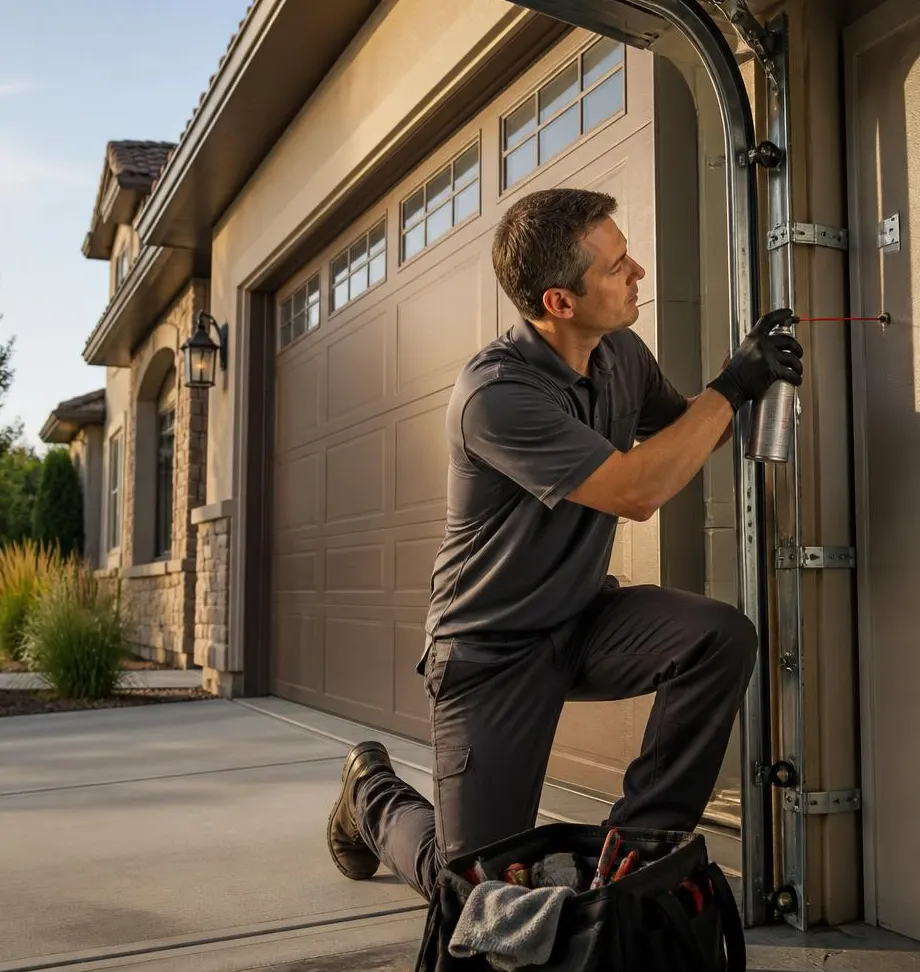
Here's the cost of putting this off one more season: a garage door that nobody uses properly still has to hold back winter rain, dust, and whatever's leaning against it from the inside. Skip the conversation now, and you're looking at a stuck door mid-storm, a spring that finally gives out under years of accidental extra load, or an opener straining against a door that was never set up for daily gym-bag traffic. None of that is cheap to fix in an emergency.
What Usually Happens When a Garage Gets Converted
Somebody builds out the garage — flooring, drywall, maybe a mini-split for the hot inland afternoons — and the actual garage door becomes an afterthought. It's either sealed shut and ignored, or it's still used as the main entrance because the inside door to the house is inconvenient. Both situations create problems the door wasn't designed for.
The Door Doesn't Know the Room Changed
A garage door is engineered around a specific job: open and close reliably, support its own weight, and seal out weather. When the space behind it turns into a workshop or home gym, the door often ends up doing one of two things it shouldn't:
- Operating constantly as the main entry point, wearing down springs and opener gears faster than normal residential use.
- Sitting unused for months, which lets rollers, hinges, and springs seize up from lack of movement — especially tough on tracks if dust from the dry season has settled into the hardware.
Either way, the symptoms show up the same: grinding or popping noises, a door that hesitates before moving, visible gaps around the edges, or an opener that strains and reverses partway through a cycle.
Insulation, Weather, and the Room You Built
If the conversion includes insulation, drywall, or a workout room that needs to stay comfortable, the garage door is now part of your home's building envelope — not just a big moving wall. A non-insulated door will undercut all that work: heat seeps through during hot inland afternoons, and when winter rain rolls in, an old door with worn weatherstripping lets water creep in along the bottom seal. If the room gets real daily use, an insulated door with intact seals is worth the upgrade, not just a nice-to-have.
Safety and Structural Realities
This is usually where the argument actually lives — one person sees a working door, the other sees a problem waiting to happen. Both can be right. A few things worth checking before deciding who's correct:
- Spring condition: a visibly stretched, rusted, or gapped spring is a failure waiting to happen, regardless of how the garage is used.
- Opener strain: if the door has become the main way in and out, confirm the opener's duty cycle can handle daily use — some residential openers aren't built for it.
- Seismic hardware: homes that have gone through earthquake retrofits should have garage door bracing checked too, since a converted garage sometimes means shelving, equipment, or gym gear gets stacked against the door frame or track area.
- Balance test: disconnect the opener and lift the door halfway by hand. If it doesn't hold its position, the spring tension is off and needs attention before it's used as a daily entrance.
The Argument-Settling Checklist
- Is the door opened and closed regularly, or sitting unused for weeks at a time?
- Are there visible gaps, rust, or cracked weatherstripping along the edges?
- Does the opener strain, reverse, or make noise partway through a cycle?
- Has anything been stacked near the tracks, springs, or bracing hardware?
If more than one of these comes back as a problem, it's not a cosmetic issue anymore — it's a safety and cost issue.
When to Call Los Angeles Garage Door Works
If the balance test fails, the springs look worn, or the door has clearly become the household's main entrance without the hardware to match, that's the point to bring in a technician instead of guessing. We handle spring replacement for doors that are carrying more daily use than they were set up for, and garage door maintenance visits to catch dust buildup, worn rollers, and failing seals before the winter rain finds them first.
If your converted garage has turned the door into something it was never built for, call Los Angeles Garage Door Works and get it checked before the next storm settles the argument for you.